
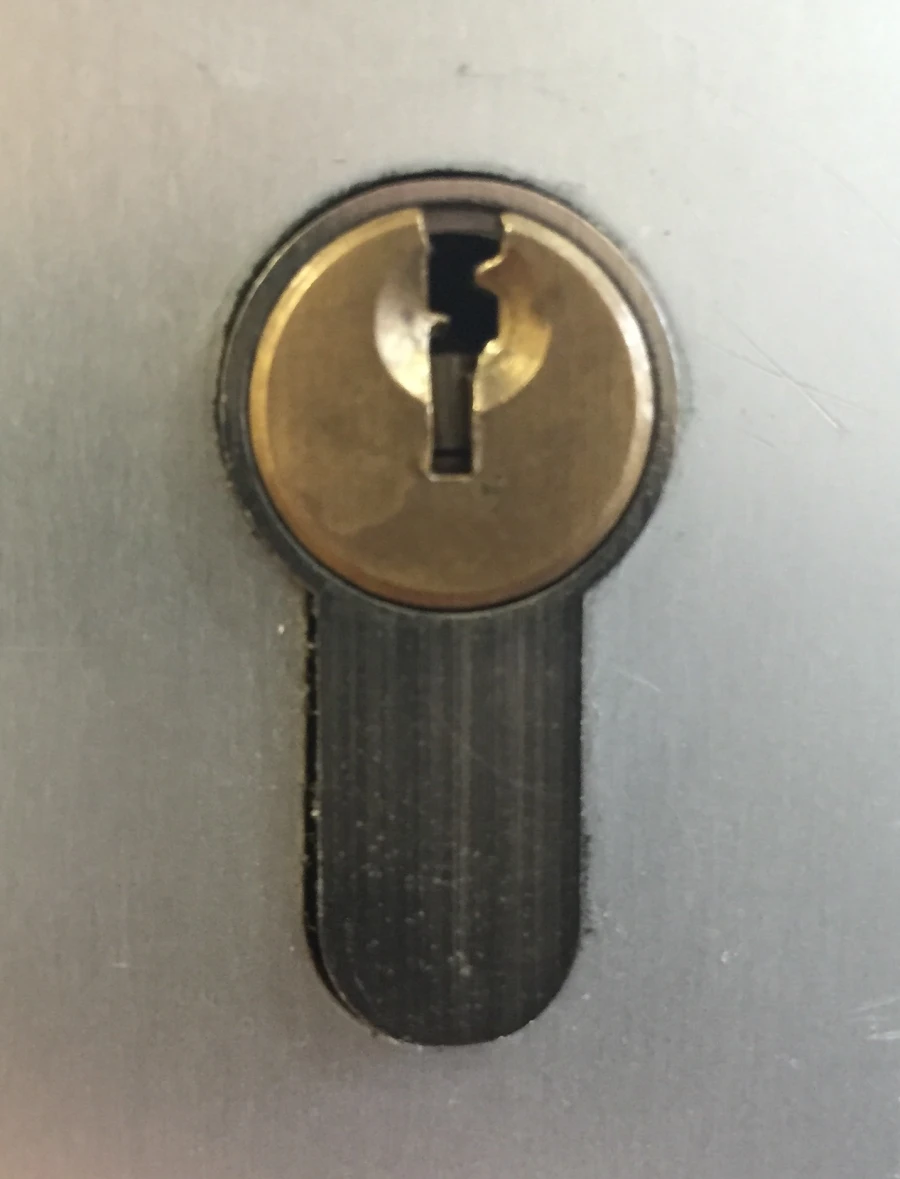
Turn the plug back to where the key went in, then pull the broken piece straight out. Use needle nose pliers, tweezers or a thin hook. The pins only let go of a key in that one spot. Twisting or pushing drives the piece deeper.
Straight Answer
- Stop. Do not push the stub back in, and do not turn the lock.
- Line the keyway up with the way the key first went in.
- Spray a little dry, graphite free lock lube into the keyway.
- Grip the piece and pull straight out. Never twist it.
- Skip super glue. It can glue the piece to the pins.
- Keep both halves. They show the cuts for a new key.
A key snaps in the cold, in a rush, or after years of wear. In Auburn and Opelika it is often a front door deadbolt, a storage unit padlock or a work toolbox. The good news is that most pieces come out clean. The bad news is that the first wrong move can make it a lock replacement.
Why It Only Comes Out One Way
Most door locks are pin tumbler locks. Small stacks of pins sit on springs inside a turning plug. Wikipedia's pin tumbler entry explains that the right key lifts each stack to the line where the plug meets the housing. With no key, the pins sit across that line. That is what stops the plug from turning.
A key goes in and comes out only when the plug sits in its starting spot. In that spot, every pin hole in the plug lines up with a pin above it. Turn the plug even a little, and the pins press down on the key. Now the piece is pinched in place.
So the first job is always the same. Get the keyway back to the angle it had when the key went in. On most locks the slot points straight up or straight down.
Five Mistakes That Turn a Pull Into a New Lock
Most extra cost starts in the first five minutes. Avoid these.
- Pushing the stub back in. It feels natural. It sends the piece past the pins, where no home tool can reach it.
- Turning the plug with the stub. The pins clamp down. The piece can bend, and the plug can stick off center.
- Super glue on a stick. A drop that runs ends up on the pins. Then the lock is glued, not just blocked.
- Heavy oil. Bob Vila's stuck key guide calls oil based lube, including the original WD-40 formula, a last resort. Its film catches dust and grit.
- Forcing a spare key in. A second key pushes the first piece deeper. Use the spare only after the keyway is clear.
Four Ways to Pull It Out, Easiest First
What you can see at the keyhole decides the tool. Start at the top of the table and stop at the first one that works.
| What You See | What to Use | How to Do It |
|---|---|---|
| A piece sticks out of the keyhole | Needle nose pliers | Grip it tight and pull straight back. No wiggling side to side. |
| The piece sits flush with the face | Thin tweezers | Slide the tips along both sides of the key and pinch. |
| The piece sits just inside | A thin hook or a key extractor | Slide it in along the top of the key. Turn it to catch a cut. Pull out. |
| The piece is deep, or the plug is turned | A locksmith | Stop here. More pushing makes it worse. |
Before any tool, give the keyway a short spray of dry lock lube. The 3-IN-ONE Lock Dry Lube page describes its formula as graphite free and made to loosen stuck locks. It also says the film resists dirt. A little helps the piece slide. A lot just drips.
A paperclip or bobby pin can stand in for a hook. Bend a tiny tip on the end with pliers. Slide it in above the key, where the cuts are, turn it toward the key and pull. It may take a few tries. If the piece moves deeper, stop.
A Magnet Will Not Save You
This tip shows up in a lot of videos. It rarely works on a house key. Wikipedia's key entry lists the usual key metals as brass, plated brass, nickel silver and steel. Brass and nickel silver are not magnetic. Most house keys are one of those two.
A steel key might stick to a strong magnet. Even then, the pins still hold it. A magnet cannot pull a key that the pins are pinching. Fix the plug angle first, or the magnet does nothing.
Pick the Right Lube for Alabama Air
Lube choice matters more here than in a dry state. Bob Vila's guide says graphite powder is a good general choice but does not suit humid climates. It points to silicone spray there instead, and calls PTFE sprays long lasting. East Alabama summers are muggy, so a dry, graphite free spray is the safer pick.
- Good. A dry lock spray labeled for locks, used in short bursts.
- Fine in a pinch. A silicone spray, aimed only at the keyway.
- Last resort. Household oil. It works today and gums up later.
The same guide says to lube locks every few months and to replace keys that are bent or worn. A key that already has a crack near the bow is the next one to snap. Replace it before it breaks in the door.
When to Put the Tools Down
Call for help when any of these is true.
- You cannot see the piece at all.
- The plug is turned and will not go back to its start.
- You are locked out and the broken key was your only way in.
- The lock is in a car door or ignition. Those have other parts that break.
- Two tries with a hook moved the piece deeper, not out.
When a locksmith shows up, check them first. The Alabama Electronic Security Board of Licensure says a licensed worker must carry the board's ID badge. If they cannot show one, the board says not to let them in. You can also check the company on the board's list of licensed companies.
Then ask for the price before any work starts. The Federal Trade Commission warned in 2008 that some locksmiths listed locally are not local at all. It told people to pick one before they need one and save the number.
Keep Both Halves
Do not throw the pieces away. Fit them together on a table. The cuts on the blade tell a locksmith how to cut a new key.
Then think about why it broke. A key that bends or sticks every day is a warning. So is a lock that needs a hard twist. That lock may need cleaning, a new cylinder or a rekey. A spare key made now costs far less than a lockout call at night.
One customer on our commercial locksmith page had a key snap inside a rolling tool cart. Tristian was there within a few hours of the call and got the broken piece out. Toolboxes, padlocks and mailboxes break keys too, not just front doors.
What to Ask Next
How do you get a broken key out of a lock with a paperclip?
Straighten the clip and bend a tiny hook on the tip. Turn the keyway back to its start. Slide the hook in above the key, turn it toward the cuts, and pull slowly. Stop if the piece moves deeper.
Will a magnet get a broken key out of a lock?
Usually not. Most house keys are brass or nickel silver, which are not magnetic. A steel key may respond, but the pins still hold it until the plug is lined up.
Is there a tool to get a broken key out of a lock?
Yes. Key extractors are thin blades with small hooks or teeth. They slide in beside the key and catch a cut. Locksmiths carry them, and hardware stores sell kits.
Will WD-40 help get a broken key out?
The original formula is oil based. Bob Vila's guide calls oil a last resort because it holds dust. A dry, graphite free lock spray is the better choice.
Can I use super glue to pull out a broken key?
We do not suggest it. If any glue reaches the pins, the lock can seize. Then a simple pull becomes a new cylinder.
Will the lock still work after the key is out?
Usually, yes. Try a spare key slowly. If it sticks or turns rough, have the lock looked at before the next key breaks.
A Broken Key in East Alabama
If the piece will not budge, call (334) 655-1300. You get an upfront price before a technician rolls, and our mobile techs typically reach you in 15 to 30 minutes. We cover Auburn, Opelika and 15 more towns. Lost the only key? Our key replacement page explains how a new one gets made. We are open 6am to 9pm daily, with 24-hour emergency service.
Close Cousins
- Locked Out of Your House in Auburn, Do These 6 Things First
- Get a Spare Car Key in Auburn While You Still Have One
- Rekey Every Outside Door When You Buy a House in Auburn
Source Links
- Wikipedia, Pin tumbler lock
- Bob Vila, 5 Fixes for a Stuck Key, updated February 2024
- 3-IN-ONE, Lock Dry Lube product page
- Wikipedia, Key (lock)
- Alabama Electronic Security Board of Licensure, How can I be sure a company or individual is licensed?
- Federal Trade Commission, FTC Urges Consumers to Use Caution When Seeking a Locksmith, May 2008