
Police guides ask for a deadbolt with a bolt at least 1 inch long, held by a strike plate screwed 3 inches into the wall stud. The screws matter most. A kicked door usually fails at the wood, not at the lock.
Straight Answer
- Put a deadbolt on every outside door, garage entry door too.
- The bolt should reach at least 1 inch into the frame.
- Hold the strike plate with 3 to 4 inch screws into the stud.
- Put one long screw in each hinge as well.
- Over half of U.S. burglaries used no force at all, per federal data.
- So lock up, and rekey when keys go missing.
People ask us which lock brand the police like best. Police guides rarely name a brand. They name parts and sizes. A good lock on a weak frame is still a weak door.
What Police Guides Ask For
Two police guides cover most of it. One is a Seattle Police crime prevention bulletin from 2015. The other is a home security hardware guide from the California Attorney General's crime prevention center. Both still sit on city websites. Neither is from Alabama, but a door frame works the same in Lee County.
| Part | What the Guides Ask For | Which Guide |
|---|---|---|
| Deadbolt | One on every outside door, including the door from the garage into the house | Seattle Police |
| Bolt length | At least 1 inch. California adds a hardened steel insert | Both |
| Strike plate screws | 3 to 4 inch wood screws into the stud. California says four to six of them | Both |
| Strike plate | A four screw, heavy duty security strike | Seattle Police |
| Hinges | At least one long screw in each hinge | Seattle Police |
| Door | Solid core, at least 1 3/4 inches thick | California AG |
| Cylinder | A solid metal guard so the lock cannot be twisted off with pliers | California AG |
| Pry bar defense | A latch guard over the gap where the bolt meets the frame | Seattle Police |
Seattle priced it too. It put a decent deadbolt at about $30 in that bulletin, and a latch guard at about $12. Heavier deadbolts ran $200 or more. Those are 2015 numbers from a Seattle bulletin, not our prices.
The Wood Gives Out Before the Lock
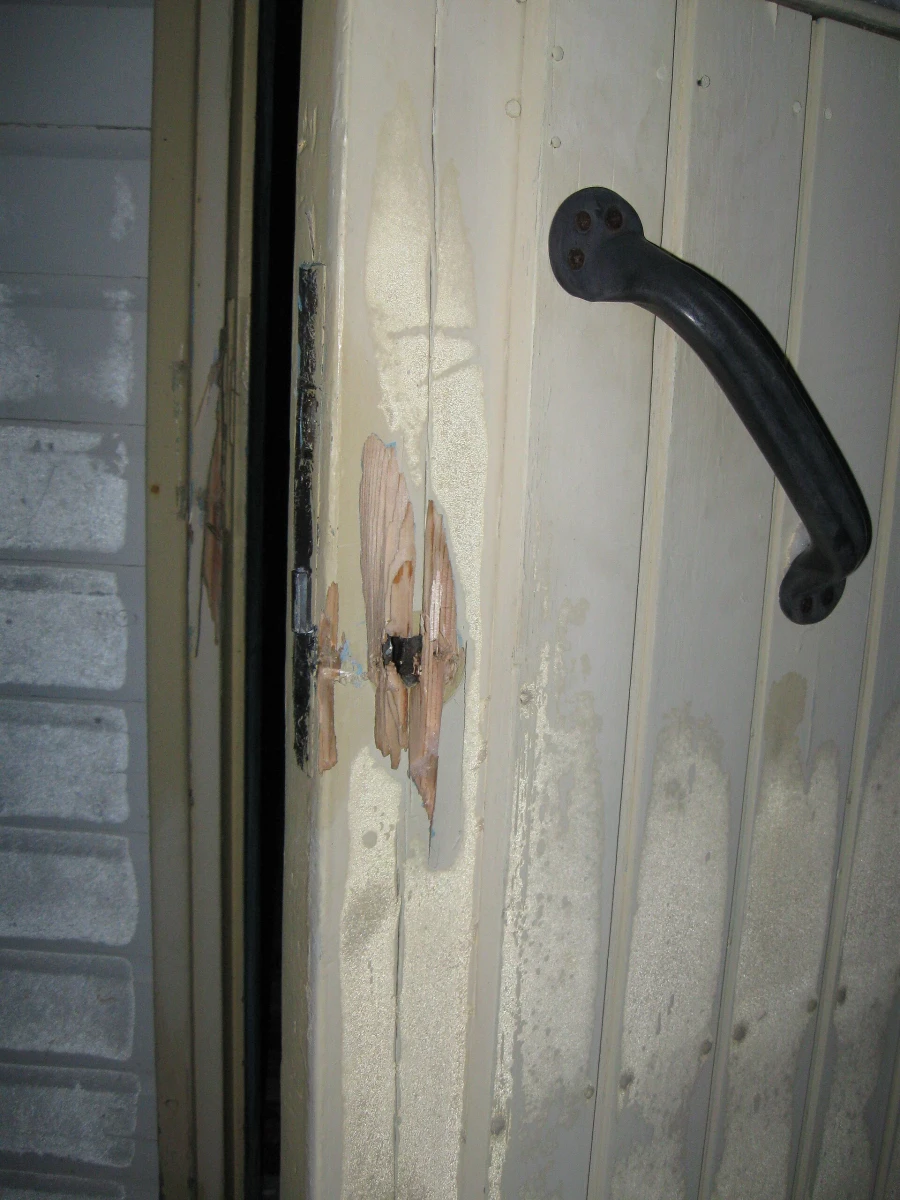
Seattle Police call a kick the most common way to force a door with a wood jamb. The frame splinters and gives way. The weak point, they say, is almost always the strike plate. On many doors it is screwed only into the thin trim.
Checkbook says the same in its lock buying guide, updated as of June 2026. It says many deadbolt strikes are held by two 3/4 inch screws. It also quotes Consumer Reports lab tests. A few good kicks, or a cordless drill for a couple of minutes, beat almost every lock in those ratings.
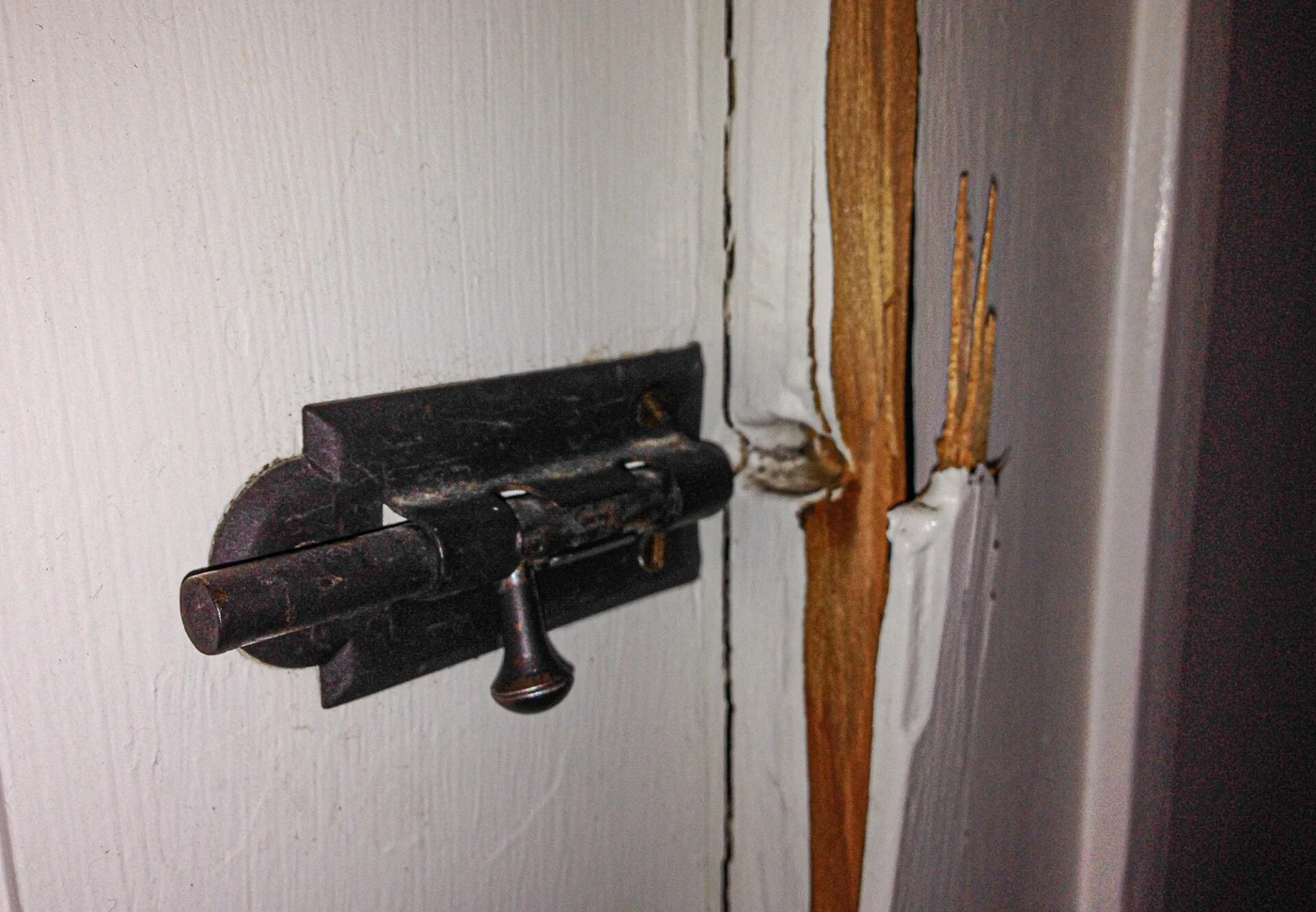
Short screws only reach the trim. Long screws reach the 2 by 4 stud behind it. Seattle Police say this one step will deter or stop most forced entries through a door. You can do it without buying a new lock.
Most Break-Ins Use No Force
The best numbers on how burglars get in come from a Bureau of Justice Statistics report from 2010. It counted about 3.7 million household burglaries a year from 2003 to 2007. More than half needed no force. The door or window was open, or the burglar had a way in.
The same report found someone was home in about 28 percent of burglaries. When no one was home, 43 percent happened between 6am and 6pm. Only 26 percent happened overnight. Lock the door when you run to the store. Lock it when you are home, too.
It also found that in nearly 4 percent of the no force burglaries with someone home, the burglar used a key. That is a small share. Still, it is the reason to rekey after a lost key, a move or a roommate leaves. Our post on rekeying a new house in Auburn covers the move in list.
What the Grade on the Box Means
Lock boxes print a grade from the Builders Hardware Manufacturers Association, or BHMA. There are two scales, and the box rarely says which.
- Commercial Grades 1, 2 and 3. Made for shops and offices. Construction Canada notes a commercial Grade 1 is more than most homes need.
- Residential Grades A, B and C. A lock gets a separate grade for security, durability and finish. It must pass every test in a category to earn that grade.
BHMA's 2025 residential deadbolt standard lists seventeen security tests. One loads the door against the deadbolt with 1,350 pounds of force. Grade A deadlatches must last 400,000 open and close cycles.
A grade tests the lock. It does not test your frame. A top grade deadbolt held by 3/4 inch screws still fails like the photo above.
Glass, Sliders and the Garage Door
A door with glass in it, or a window close by, changes the lock choice. The California guide calls for a double cylinder deadbolt when glass sits within 40 inches of the lock. That type needs a key on both sides, so a hand through broken glass cannot turn it.
The same guide warns that many towns ban double cylinder locks on doors used as fire exits. It says to ask your local fire department first. If you use one, it says to leave a key in the inside lock while anyone is home. Seattle Police say their city code does not allow them in apartments or condos at all.
- Sliding glass doors. The California guide calls for 1 1/4 inch sheet metal screws in the top of the frame, at both ends and the middle. That keeps the door from being lifted out.
- Hinges outside. If the pins face out, the guide asks for non removable pins or a locking pin.
- Garage entry door. Seattle Police want a deadbolt here too. Treat it like a front door.
Renting in Auburn? Ask before you swap hardware. Our post on Alabama lock rules for tenants and landlords covers who can change what.
Auburn Police Will Look at Your Home
You do not have to guess alone. The Auburn Police Division lists crime prevention services that include residential surveys, house checks and neighborhood watch programs. To schedule one, its page lists the Community Services sergeant at (334) 501-3124.
- House checks. Patrol officers check on your home while you are away for a long stretch. The house check page calls it a free service. Call (334) 501-3150 on weekdays, or (334) 501-3100 after hours.
- Eagle Watch. The city asks owners of outdoor cameras to register them, so police can ask for footage fast. The program is free.
A home survey tells you where your house is weak. A locksmith fixes the hardware it finds.
A 20 Minute Door Check
You need a screwdriver and a tape measure. Do every outside door.
- Lock the deadbolt with the door open. Measure how far the bolt sticks out. Under 1 inch is short.
- Take one screw out of the strike plate. If it is under 3 inches, swap in a 3 inch wood screw.
- Do the same on the knob latch strike plate.
- Swap one screw in each hinge for a long one.
- Knock on the door. A hollow sound means a hollow core door.
- Look for glass within reach of the lock.
- Count the keys out there. Builders, old tenants, a dog walker. If you cannot count them, rekey.
A screw that spins and never bites means the wood behind it is gone. That is a frame repair, not a screw swap.
What to Ask Next
What door locks do police recommend?
Police guides ask for a deadbolt on every outside door with a bolt of at least 1 inch. They care more about the strike plate. Seattle Police want it held by 3 to 4 inch screws into the stud.
Can a burglar open a deadbolt lock?
A kick is the bigger risk. Seattle Police say kicking is the most common way to force a door with a wood jamb. Long strike screws are the fix for that.
What is the most secure type of lock for a door?
A solid deadbolt with a hardened bolt and a metal cylinder guard, set in a reinforced frame. The lock and the frame have to work together.
Are 3 inch screws really better than the ones in the box?
Yes, for the strike plate. Checkbook says many strikes ship with 3/4 inch screws. Those only reach the trim. A 3 inch screw reaches the stud.
Should I get a double cylinder deadbolt?
Only if glass sits close to the lock, and only after you check fire rules. A key is needed to get out, which matters in a fire. Keep a key in it while anyone is home.
Will Auburn police check my house?
The Auburn Police Division lists residential surveys and free house checks. Call (334) 501-3124 for crime prevention, or (334) 501-3150 for a house check.
Door Kicked or Keys Gone?
If a door was forced, we repair or replace the damaged lockset and reinforce the strike plate. We can rekey while we are there. Call (334) 655-1300 and get the price before a technician rolls. Our house lockout and lock repair page has more. We cover Auburn, Opelika and east Alabama. We are open 6am to 9pm daily, with 24-hour emergency service.
Close Cousins
- Rekey Every Outside Door When You Buy a House in Auburn
- Locked Out of Your House in Auburn, Do These 6 Things First
- Our commercial locksmith service
Source Links
- Seattle Police Department, Crime Prevention Bulletin, Home Security Door Security, December 2015
- California Attorney General's Crime and Violence Prevention Center, Home Security Hardware, via City of Paramount
- Bureau of Justice Statistics, Victimization During Household Burglary, September 2010
- Checkbook, Choosing the Right Locks, as of June 2026
- BHMA, A156.40 2025 Residential Deadbolts
- Construction Canada, Standards for Residential Hardware Raise the Bar, November 2017
- City of Auburn Police Division, Crime Prevention
- City of Auburn Police Division, House Check